Paying an EOI on a Plotted Layout Before Launch: A Bangalore Buyer's Checklist
Developers of plotted layouts on Bangalore's fringes frequently invite expressions of interest months before a project is formally on sale. If a sales executive has asked for an EOI cheque, pause and read this first. The pages ahead explain the paper, the law around it, the pros and cons of acting early, and what to demand in writing. The practice is most visible along the Devanahalli, Sarjapur and Chikka Tirupathi corridors.
The Meaning of an EOI
An EOI tells the developer that you would like to be considered once sales begin. A modest sum goes with it, a small fraction of what a plot costs. What you receive is a position in the line when allotment day arrives.
It should not be mistaken for a booking. Most EOIs carry no plot number, often no fixed price and no sale agreement. Until registration and launch, nothing stops the developer from redrawing the layout, resizing plots or revising the rate.
What the Law Says
The central RERA statute of 2016 stops a promoter, at section 3, from advertising, taking bookings or selling any plot until the project has been registered. Layouts are covered as much as apartments. Only small schemes are exempt: land up to 500 sq m, or up to eight units.
That explains why early payment is labelled interest rather than booking. Without a Karnataka RERA number, the plan, the completion date and the dedicated bank account are all still to come. A payment now rests on the developer's good faith and the wording of the receipt.
Two further rules apply once the project is registered. Section 13 limits collections to a tenth of the price until a written sale agreement is signed and registered. Section 4 requires 70% of what buyers pay to be held in a dedicated account, used only for the land and building of that project.
The Pull of Going First
Those who join the queue early pick first, and that counts when corner plots and favoured facings go quickly. They may also be quoted a lower launch rate than later buyers, and they get time to study the plan before crowds appear.
Unrecorded promises count for nothing. The queue number, the promised price per sq ft or any discount should be put on paper, either on the form or in a message from the company. A promise made over the phone by a salesperson is worth little on launch day.
The Price of Going First
Money paid at this stage lies outside the safeguards that registration brings. Launch dates slip, and plot numbers and sizes can change at sanction. The price is final only on launch day, so a saving is a hope rather than a figure.
Plots are also slow assets. They earn no income, and the infrastructure around a fresh layout can take years to appear. If the money may be needed back in two or three years, think hard before putting it into an outskirts EOI.
Why These Layouts Keep Appearing at the Periphery
Tracts big enough for plotted layouts are now found mainly on the periphery. Several schemes gather around the Satellite Town Ring Road, under construction, and the proposed Peripheral Ring Road. Their case depends on road and rail links yet to be completed.
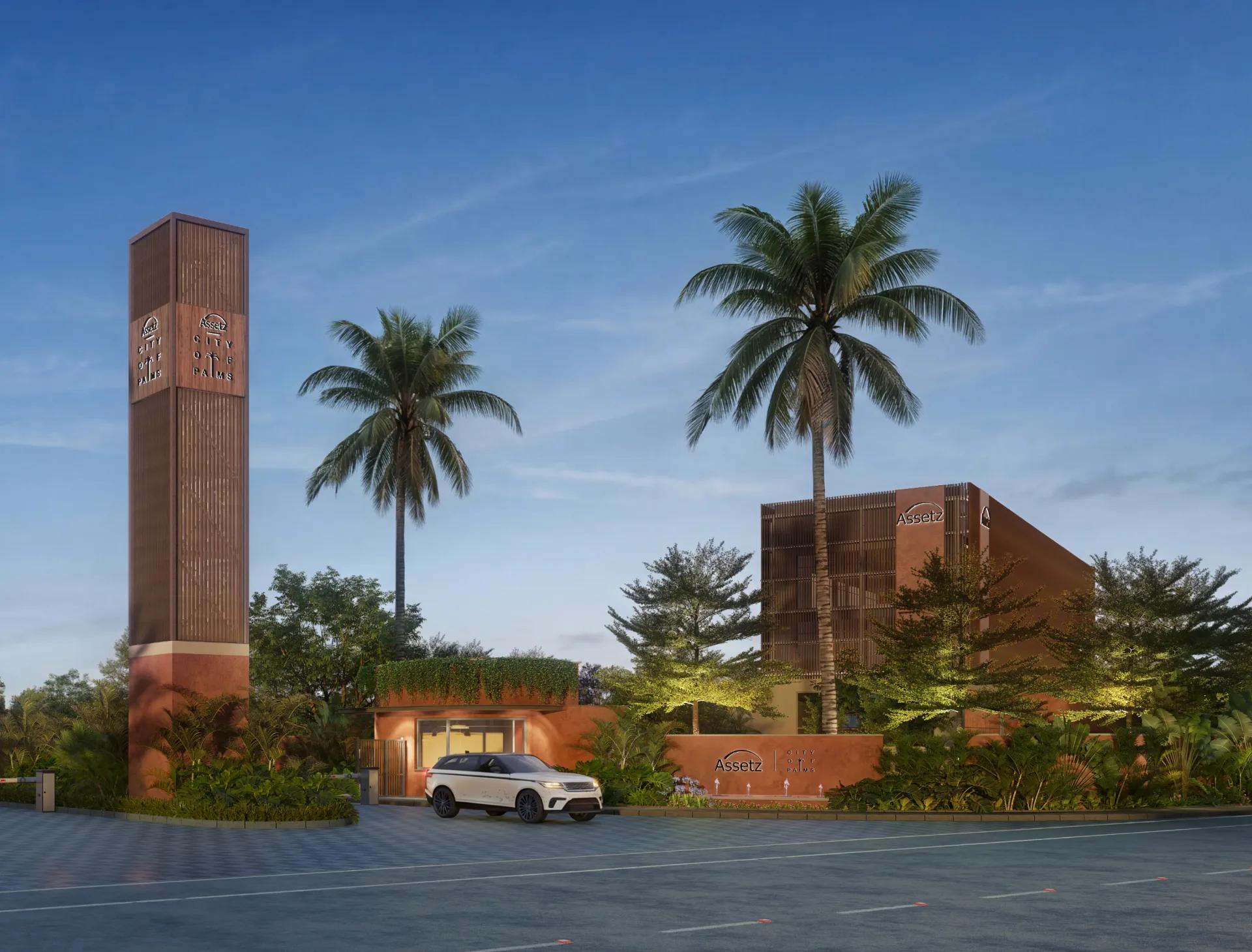
Up north, the airport belt at Devanahalli has drawn plenty of layouts, including Assetz Codename Palmscape, off IVC Road, which is taking expressions of interest. East of the city, the neighbourhood of Chikka Tirupathi shows a similar pattern. In each place the payoff hinges on infrastructure arriving on schedule, so try the drive at rush hour now.
Wording to Insist On
At this stage the receipt is the only paper in your hand. Ask that it record the amount paid, and state whether the cheque is to be deposited at once or held back until launch. It should call the sum fully refundable, with the days a refund takes. Find out whether you would lose any interest or face a deduction on withdrawing.
The receipt should also give your queue number and explain how allotment will be decided. If EOI holders are promised a rate or discount, that belongs there as well, stated per sq ft, along with the month in which registration and launch are expected.
A held cheque is the safer arrangement, since your money stays in your account. Should the cheque be deposited, the receipt must say which company received it and into which account. Refuse cash, and refuse transfers to an agent's personal account.
Papers for the Lawyer
Land records decide whether a plot can ever be registered, financed or built on. Ahead of any booking that follows an EOI, ask a lawyer to review the title deeds of the full parcel, traced back three decades, and its encumbrance certificate. Also vital are the order converting farmland to residential use and the layout plan sanctioned for the locality.
Ask for the release order covering the plots offered, since authorities free up sites in stages. If a landowner takes part of the plots, the joint development agreement is needed. The RERA registration should list the plot count, the land area and the completion date.
The sanctioned plan also shows road widths, parks, civic sites and any drain, lake buffer or high-tension line near the land. A plot next to such a feature needs another look, however low the price.
Turning an EOI Into a Booking
After the RERA number appears, the conversion happens only if you accept a specific plot at a specific price. Slow down here. The allotment letter must show the plot number, dimensions, rate, all other charges and the payment schedule.
A sale agreement follows, and it must be signed before payments reach 10% of the price. For plots priced above Rs. 45 Lakhs, budget for 5% stamp duty with its cess and surcharge, about 5.6% together, and a registration fee of 2%. Confirm early that your lender has cleared the layout; plot loans often fund a lower share than home loans.
If the launch price or the plots available disappoint, withdrawal and a refund under your receipt's terms remain open. More layouts at various stages are collected under plots for sale in Devanahalli.