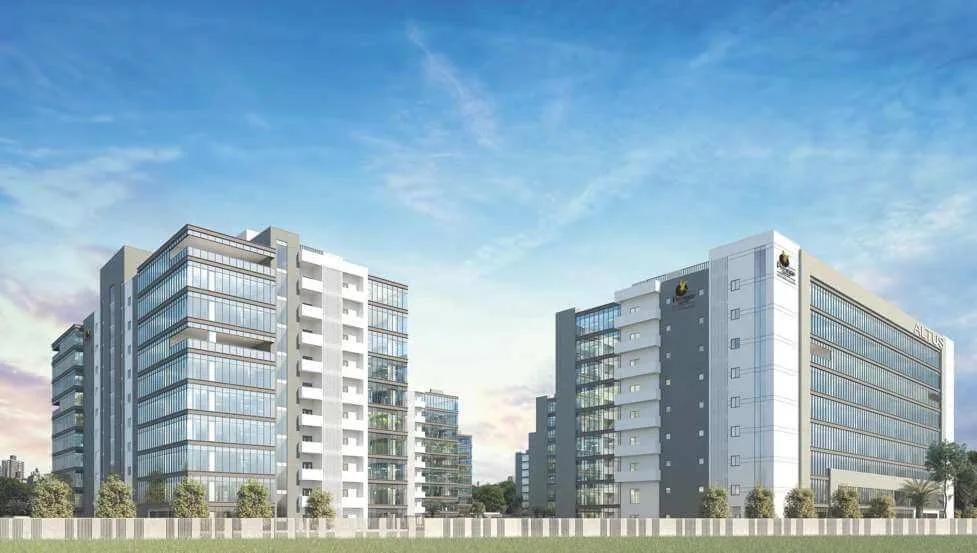
Three June 2026 Land Deals in North Bangalore: A Buyer's Reading

June 2026 brought a burst of land news from the north of the city. Two stock-market-listed builders, Puravankara and Shriram Properties, secured three plots for future apartment projects within a few weeks of each other. A landholding announcement is not a launch, so this article asks what the news is worth to someone shopping for a home, and which questions deserve answers once sales begin.
Who Got What
Puravankara's first move came on 1 June 2026, when a joint development agreement gave it 11.23 acres in Doddagubbi village. It expects 7.4 lakh sq ft of homes there, and values the sales at Rs. 1,100 crore.
Next came Shriram Properties on 15 June, with a joint development of its own on 9.1 acres beside a lake in the same village. It aims for roughly 0.67 million sq ft and sales above Rs. 600 crore, and promises a launch in the coming financial year, 2026-27.
Two days later, on 17 June, Puravankara announced an outright purchase of 9.73 acres in Sanna Ammanikere. Plans there run to 8.9 lakh sq ft and a sales value of Rs. 800 crore. The builder named no launch date for either of its sites, and exchange filings for each deal were made the same day.
Understanding the Two Locations
Doddagubbi is a village on the city's north-east fringe, with Hennur Road to its west and Bagalur above it. Residents commute along Hennur Road, Thanisandra Main Road and the ring road, work at nearby Manyata Tech Park, and use NH 44 to reach the airport at Kempegowda.
Sanna Ammanikere belongs to a different sub-market, the Devanahalli belt beside the airport. Puravankara cited the Satellite Town Ring Road, the aerospace park and the planned airport metro as its reasons, though the metro is still being built and motorists must rely on roads for now.
Because of these differences the two areas draw different households. Doddagubbi continues the Hennur and Thanisandra residential stretch, close to northern workplaces. Devanahalli attracts people employed by the airport, the aerospace park and the industries around them.
What Joint Development Changes for a Buyer
Land comes from the owner in a joint development, while the developer carries the cost of approvals, building and selling. Finished homes, or the revenue from them, are divided in an agreed ratio. The builder spends nothing on buying land at the start, which is why such agreements are quick to sign.
A purchase leaves everything with the developer, so only one seller faces the buyer. In a joint development there are two, and the landowner may fix its own prices and payment terms for its share. That makes the identity of the seller a question to settle before booking. The sale agreement must name it, and the RERA record ought to list the landowner among the promoters, along with the builder.
Reading the Sales Values Sensibly
GDV, short for gross development value, is a forecast of total revenue from every home in the project over its full selling period. It is estimated when only land has been secured, before any approved plan exists, so it gauges the project's scale and says nothing about one flat's price.
Dividing it by the planned floor area produces rough averages. Puravankara's Doddagubbi site gives close to Rs. 14,900 a sq ft, while each of the other two gives close to Rs. 9,000. Prices at launch could land above or below these averages. The wide difference between Doddagubbi's two plots hints at distinct products on adjoining land, so carpet area set against each price list will be the fair test.
What Must Happen Before Sales
Approvals come first: a sanctioned building plan, then registration with Karnataka RERA, and only after that may a home be advertised or sold. The Karnataka RERA portal listed no registered project on any of the three plots in early October 2026.
Unit sizes, tower heights, prices and handover dates will be settled at registration. Before that, Puravankara frequently promotes a scheme under a code name and invites expressions of interest. A payment at that stage does not count as a booking, so it should be modest and refundable in writing.
Shriram's lakeside plot adds a further approval. Rules on buffer zones near lakes and storm drains limit where towers can rise, and the sanctioned plan will reveal the distance between them and the water.
A Larger Pipeline
Puravankara booked Rs. 7,407 crore of sales in the twelve months to March 2026, which was 55% above the previous year, and wants Rs. 11,200 crore in 2026-27. Acquisitions feed that goal: some 42 acres across the city were added between late May and June's end, among them Mandur and a parcel near Sarjapur.
Devanahalli, Thanisandra and Bagalur already have a number of big projects on sale. As land piles up with large builders, more launches will follow in the coming two years. That widens choice for buyers, though it also means stiffer competition for owners hoping to sell resale flats in those pockets.
The announcements argue neither for rushing nor for waiting. Families who want a home in a year or two will do better with a registered scheme that has progressed well, whereas those who can wait may follow these plots and weigh them at launch.
Questions to Ask When Sales Open
The same set of questions fits all three plots.
- What is the RERA number, who are the promoters, and when is the registered completion date?
- Does the registration's list of survey numbers match the land described in the sale agreement?
- In the joint developments, does the chosen home belong to the developer's share or the landowner's?
- What does the sanctioned plan show, including the buffer from the lake at Shriram's plot?
- What are the carpet area and the full cost sheet covering parking, deposits and GST?
- Where will the water come from, how will sewage be treated, and how wide is the approach road?
- How long is the drive from the site gate to work in rush hour?
The EMI calculator turns any price into a monthly outgo and an upfront cash figure at today's rates. A loan sanction arranged ahead of launch gives a buyer time to go through the paperwork unhurried.